Articles
-
Training for High Performance
DURING MY TIME as a station officer, I learned that the best crews don’t just train to check a box, they train to master their craft. If you are looking to create a high-performance team, the best place to start is by focusing on establishing a habit of consistent training and a constant pursuit of growth. While most firefighters recognize the importance of training, I believe we often underestimate its full potential. The hard work of many great firefighters across the United States is proving just how critical training is to our success. But are we truly maximizing its benefits?
Training is the safety net of the fire service. It is what we fall back on when seconds count and lives are on the line. In my opinion, it is the quality and consistency of our training, not policies and procedures, that keep us safe. Yes, policies have their place, but when the heat is on, it’s our training that determines success.
-
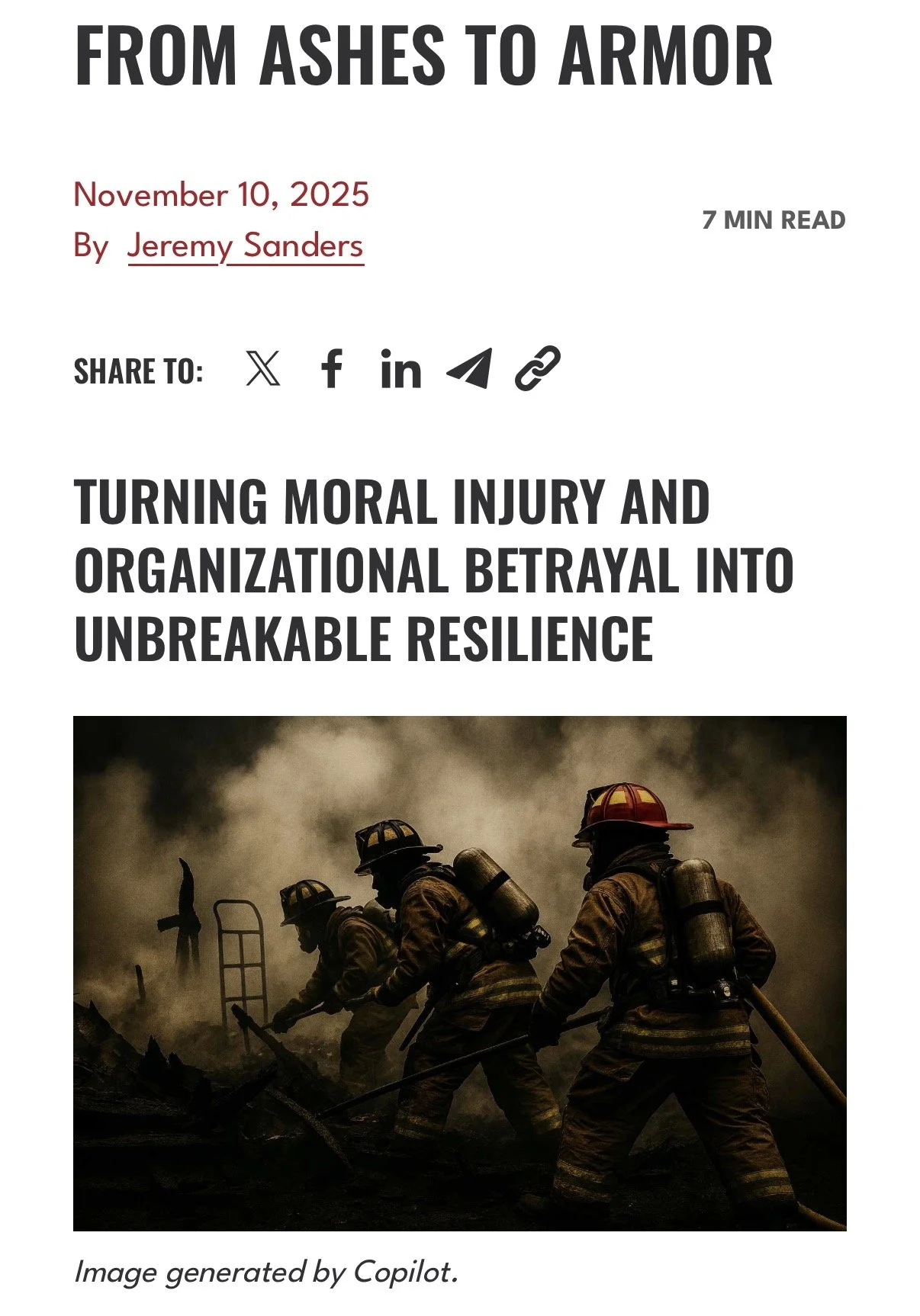
From Ashes to Armor
Throughout history, stories of warriors, epic battles, and legendary sacrifices have filled our imaginations. These physical battles are easy to visualize, well documented, and tangible. But I can’t help but think that history’s most profound and enduring battles are some that have never been shared—these are the battles fought within. These internal wars shape our identity, test our limits, and demand the most from our spirit. This in no way is something new, warriors of every era and dynasty most certainly faced the same internal struggles.
As I reflect on my own journey, I realize the most powerful revelations don’t come from the battlefield itself but from within the warriors who fought on them. What wisdom would ancient warriors share about conquering self-doubt, despair, and betrayal? Although we may never know what they would say, we can look to modern warriors who fight battles just as intense, though largely unacknowledged.
-
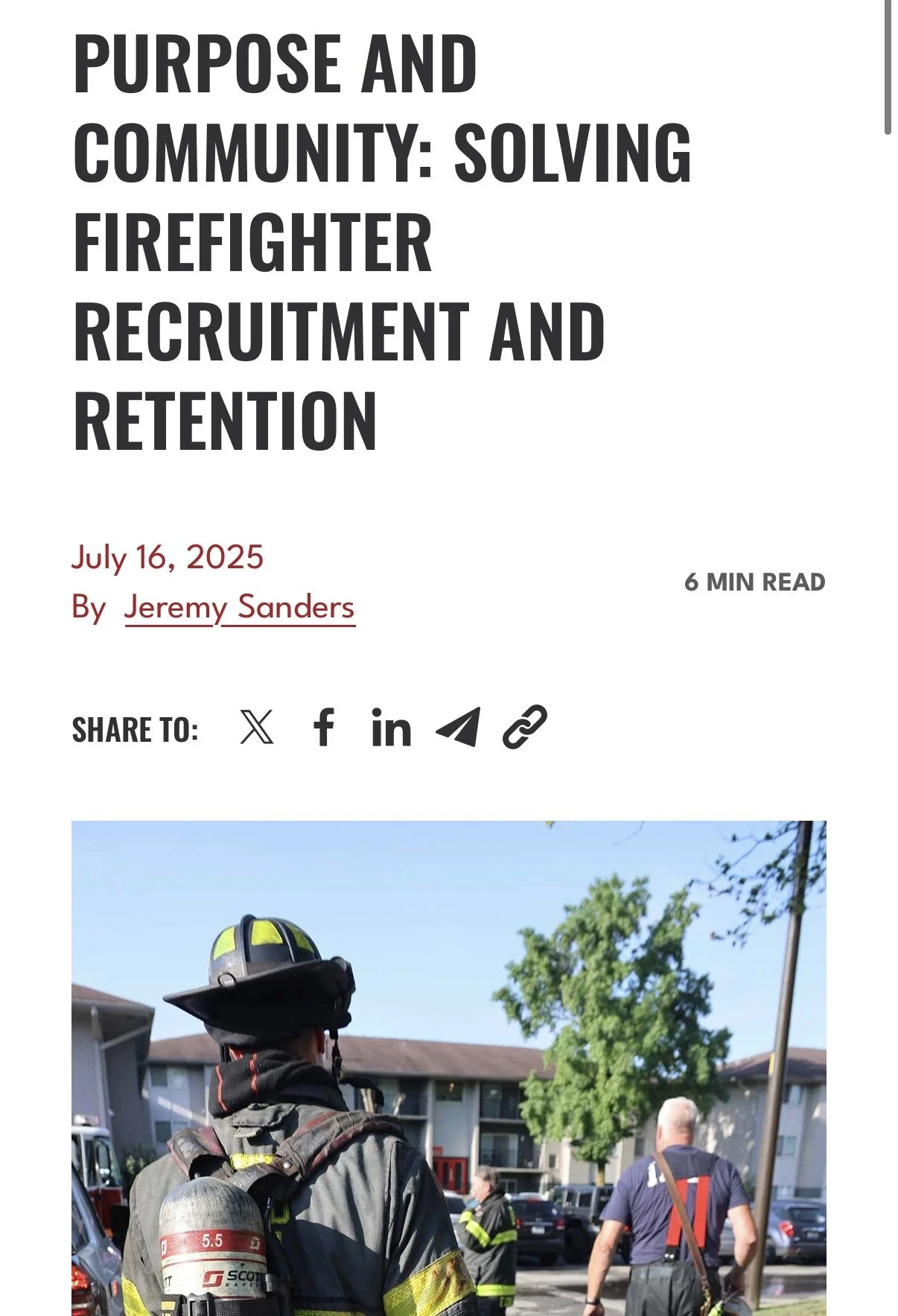
Purpose and Community: Solving Firefighter Recruitment and Retention
Recruitment and retention in the fire service have been growing concerns for years, and it’s clear that the old methods are no longer working. While this isn’t a sign that the fire service is collapsing, it does indicate that we need to take a hard look at our current approach. If we want to reverse this trend, we must stop applying temporary fixes and instead rethink the entire process, from how we attract recruits to how we develop and retain them.
Rather than simply increasing pay or benefits, the key lies in reemphasizing mission, culture, and purpose. The fire service has always been about something bigger than any individual, and it’s time we started framing our recruitment and retention strategies around that truth. When we lose sight of these core values, we fail not only to attract the right candidates but also to keep them. The real solution lies in creating an environment where firefighters feel valued, challenged, and part of something meaningful.
-
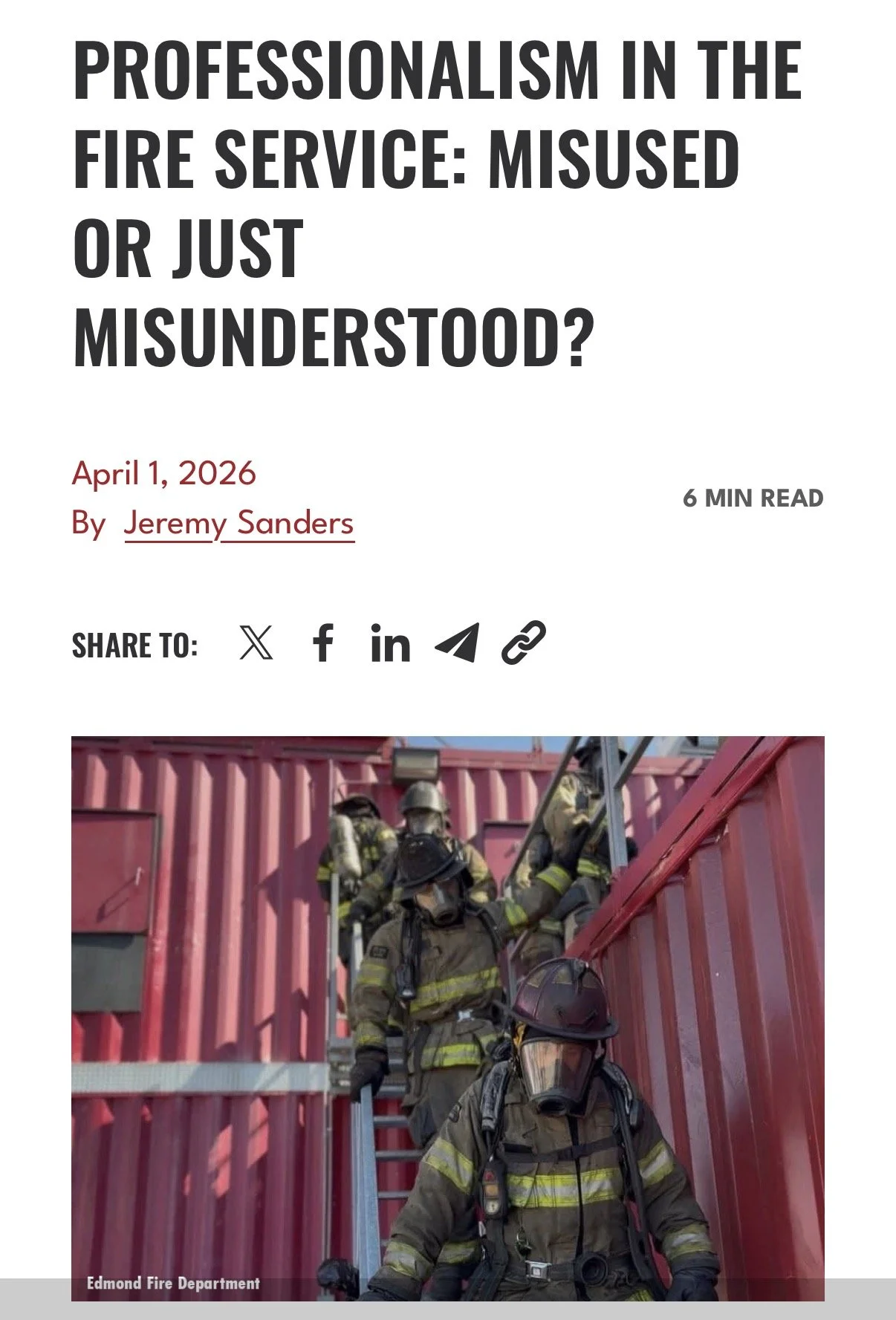
Professionalism in the Fire Service: Misused or Just Misunderstood?
The fire service has always prided itself on tradition, honor, and excellence. But in today’s rapidly changing world, one word seems to stir more debate than ever before: professionalism. How is this word applied to such a dynamic field as the fire service? Is it about how we look, how we act, or how well we do the job?
Some see professionalism as a rigid set of rules—a dress code, a clean-shaven face, and a pressed uniform. Others argue it is something deeper, something defined by knowledge, skill, and performance under pressure. The reality? Professionalism is at the core of everything we do, yet it remains one of the most misused and/or misunderstood concepts in the fire service.
-
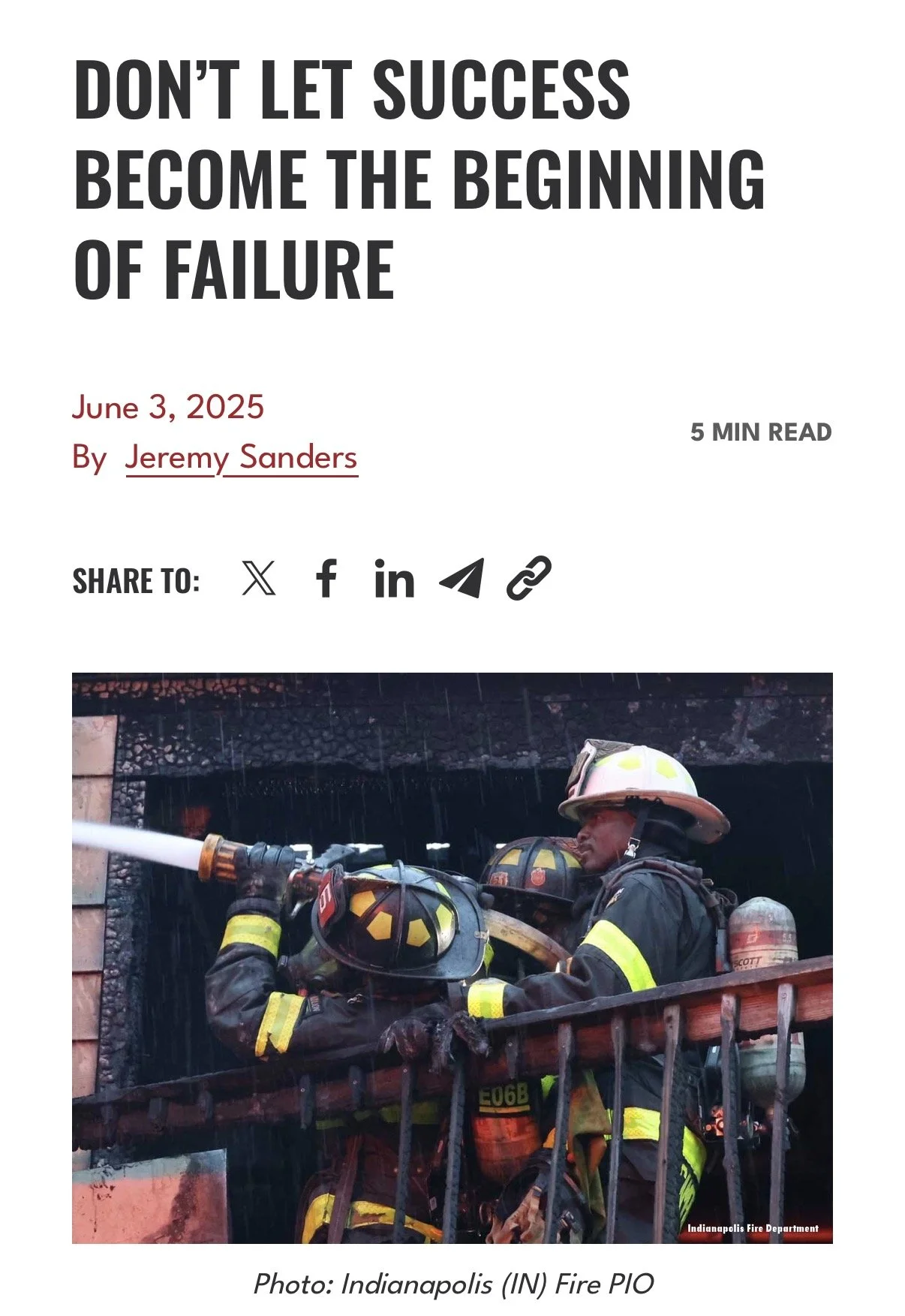
Don't Let Success Become the Beginning of Failure
What is the biggest obstacle you will face when striving to achieve a major goal? While there are many valid answers, one stands out as particularly dangerous: complacency. It is a silent killer of progress, creeping in through laziness, comfort, fear, and overconfidence. But perhaps the most insidious form of complacency is the one that follows success. As John Maxwell wisely said, “The greatest enemy of tomorrow’s success is sometimes today’s success.”
We’ve all seen it—the sports team that underestimates a weaker opponent and loses, or the once-promising firefighter who fades into irrelevance because the individual stopped growing after reaching a certain status. Complacency brought on by success is a subtle yet powerful trap that is easy to fall into and difficult to escape.
-
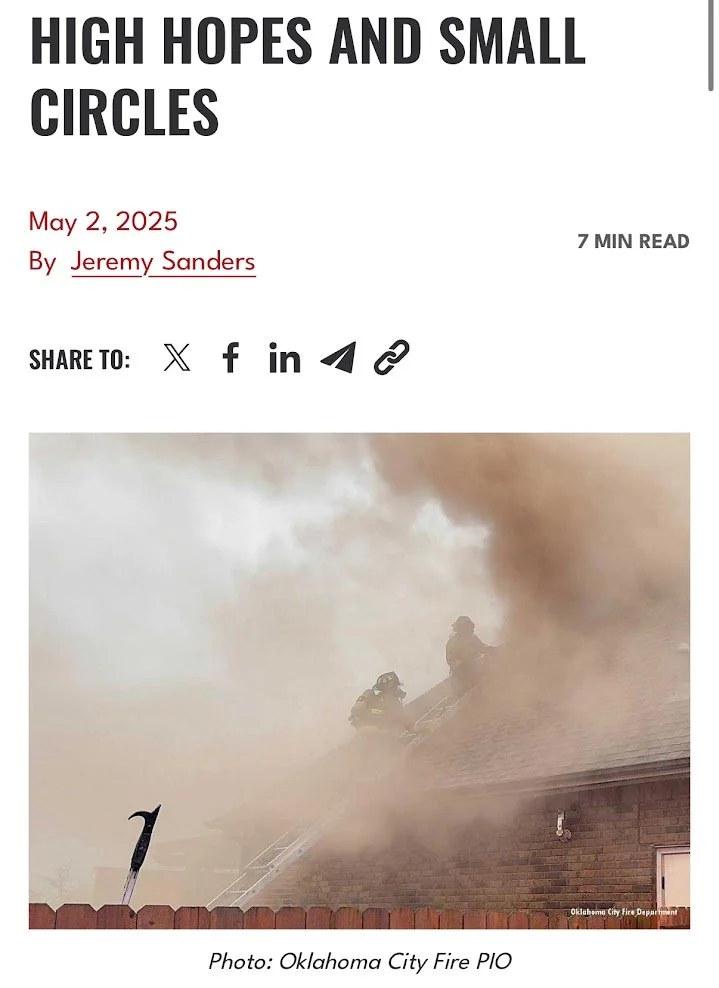
High Hopes & Small Circles - Firefighter Nation
Wouldn’t it be great if this article held the ultimate key to creating and maintaining a positive organizational culture? What if it had all the answers to our workplace challenges? I would argue that even if it did, it wouldn’t matter. It wouldn’t matter because change doesn’t come from just reading, but from action. The reality is the people who need this most aren’t the ones seeking it. Those who resist progress don’t spend their time reading articles like this, and without decision-makers willing to implement change, knowledge alone won’t move the needle. Or will it?
-
Wait....Are We the Problem? - Fire Engineering
I often find myself wondering why the fire service isn’t better off than it is. Like any good firefighter, I begin to formulate plans that will fix all its problems. Even better, I will often recruit one or two additional firefighters to be involved in the problem-solving process—a time-tested technique for quickly pinpointing those who are to blame.
-
The Art of Changing and Protecting Culture - Fire Engineering
Over the past couple of years (and as I write this), I have become very intrigued with the term “culture” as it relates to the working environment. This is a term that, until now, I have never really heard much about, especially in the context of leadership. Now that I have, I have become infatuated by the ideal of culture in the workplace. Every chance I get, I want to soak up as much about it as I can. I want to create a culture that produces great leaders, a culture that others who aren’t even on my team want to be a part of.
Creating and protecting this culture that I care so much about is not an easy job, and it does not happen without effort. I tell my team members that this type of culture I want to create is so important to me that I will fight to protect it. And, in fact, it is something I have had to do fairly often. To create a work environment that is better than anything anyone else has created, you must work harder and do things that no other leader has done……
-

Where Is The Why?
One of the most frustrating things that anyone in middle management can be faced with is to be given a mission, policy, task, etc. that they don’t believe in but then must convince their team to believe in and carry it out. As middle management, when we’re faced….
-
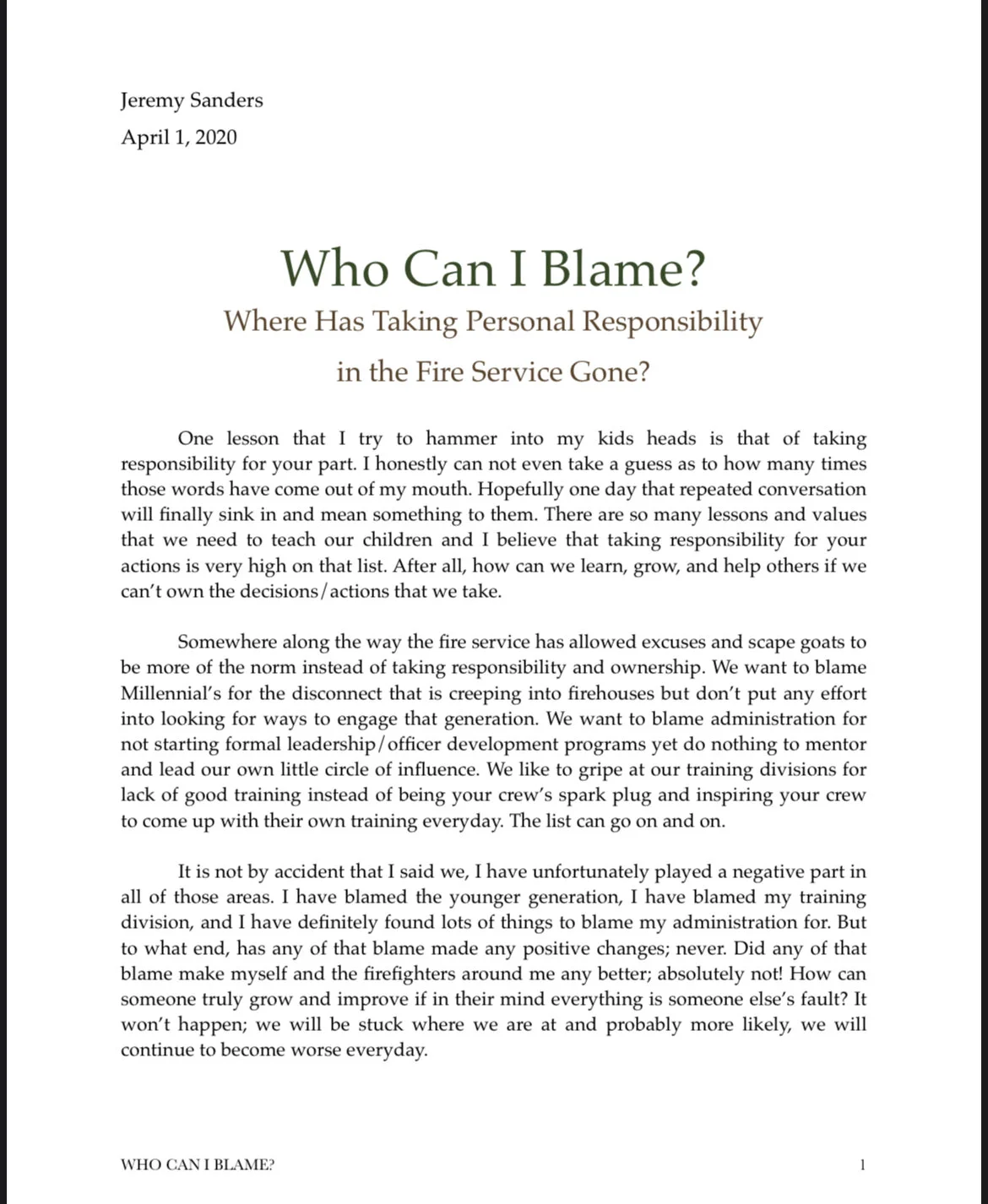
Who Can I Blame?
Where has taking personal responsibility in the fire service gone?
-
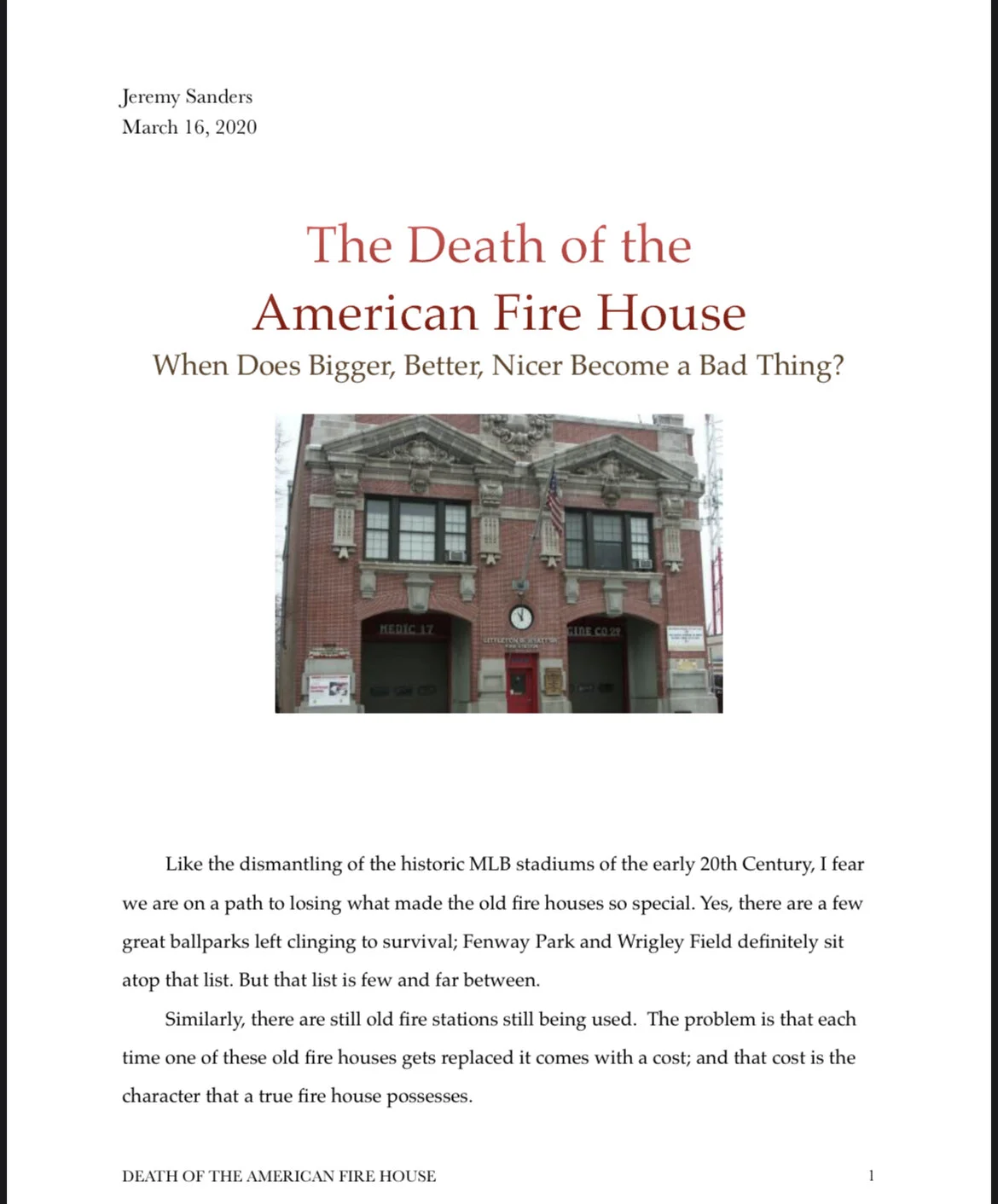
The Death of the American Firehouse
When does bigger, better, and nicer become a bad thing?
-

Ownership vs. The Virtual Tour
Can there be a sense of ownership without personalization?
-
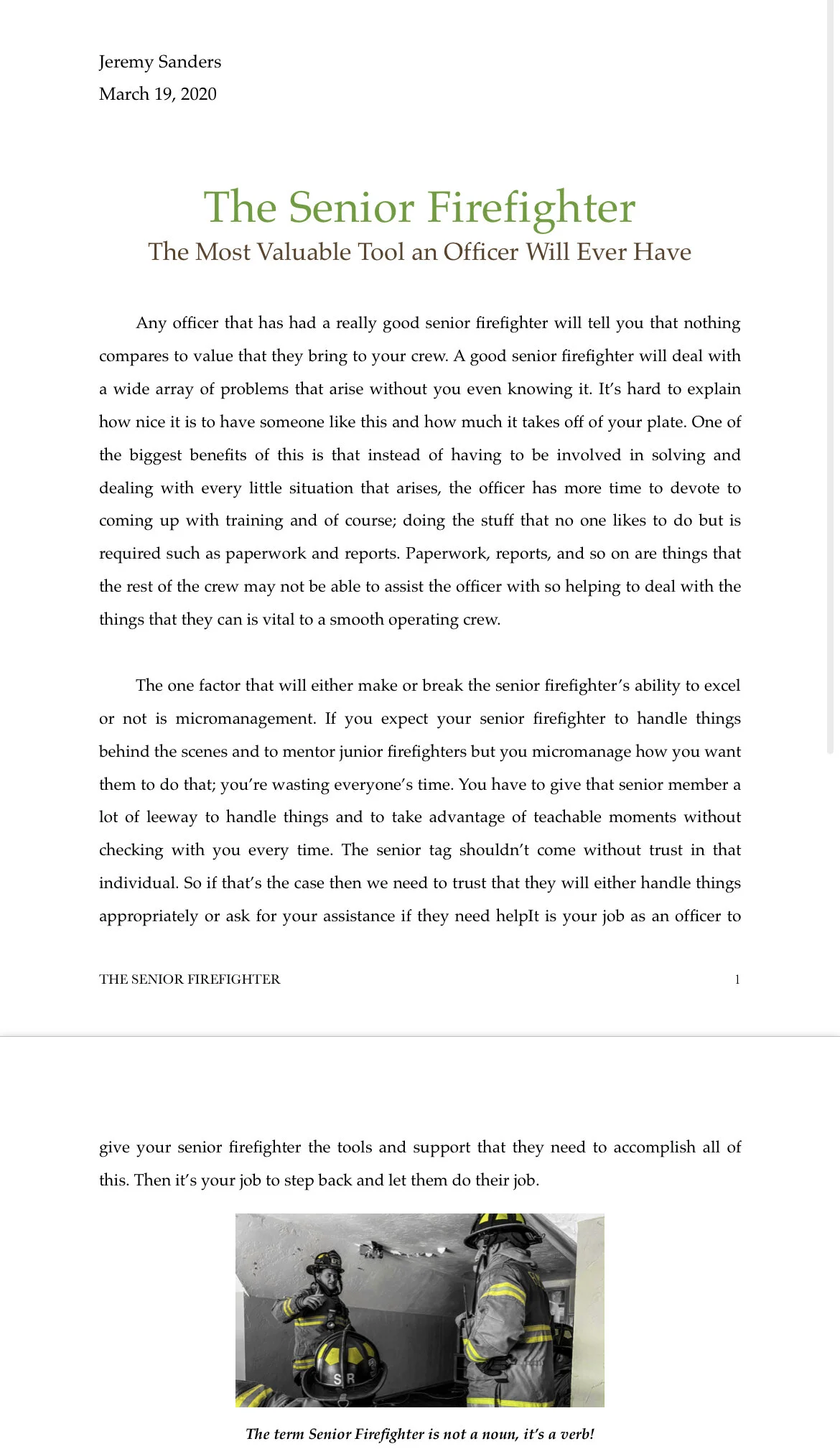
The Senior Firefighter
The most valuable tool an officer will ever have.
-
DAIR-ing Leadership
Leading through Duty - Attitude - Integrity - Respect
Documents and Training Aids
-
Firefighter Rescue Survey
TO RAISE AWARENESS AND DEMONSTRATE THE VALUE OF FIREFIGHTING RESCUE REPORTING FOR THE IMPROVEMENT OF CIVILIAN OUTCOMES AND FIREGROUND OPERATIONS.
-

C1C File Share
This is my Google Doc Drive that I have placed everything I have recieved in preperation for creating my crew’s handbook. It also includes all of the documents that I use in our Crew Handbook.
-
Lessons That I Learned the Hard Way as a Station Officer
This is a document that I put together that contains the lessons that I learned by trial and error. I want to share this with everyone so that you don’t have to make the same mistakes that I did. I hope that you can take this and learn from the mistakes that I made.
-
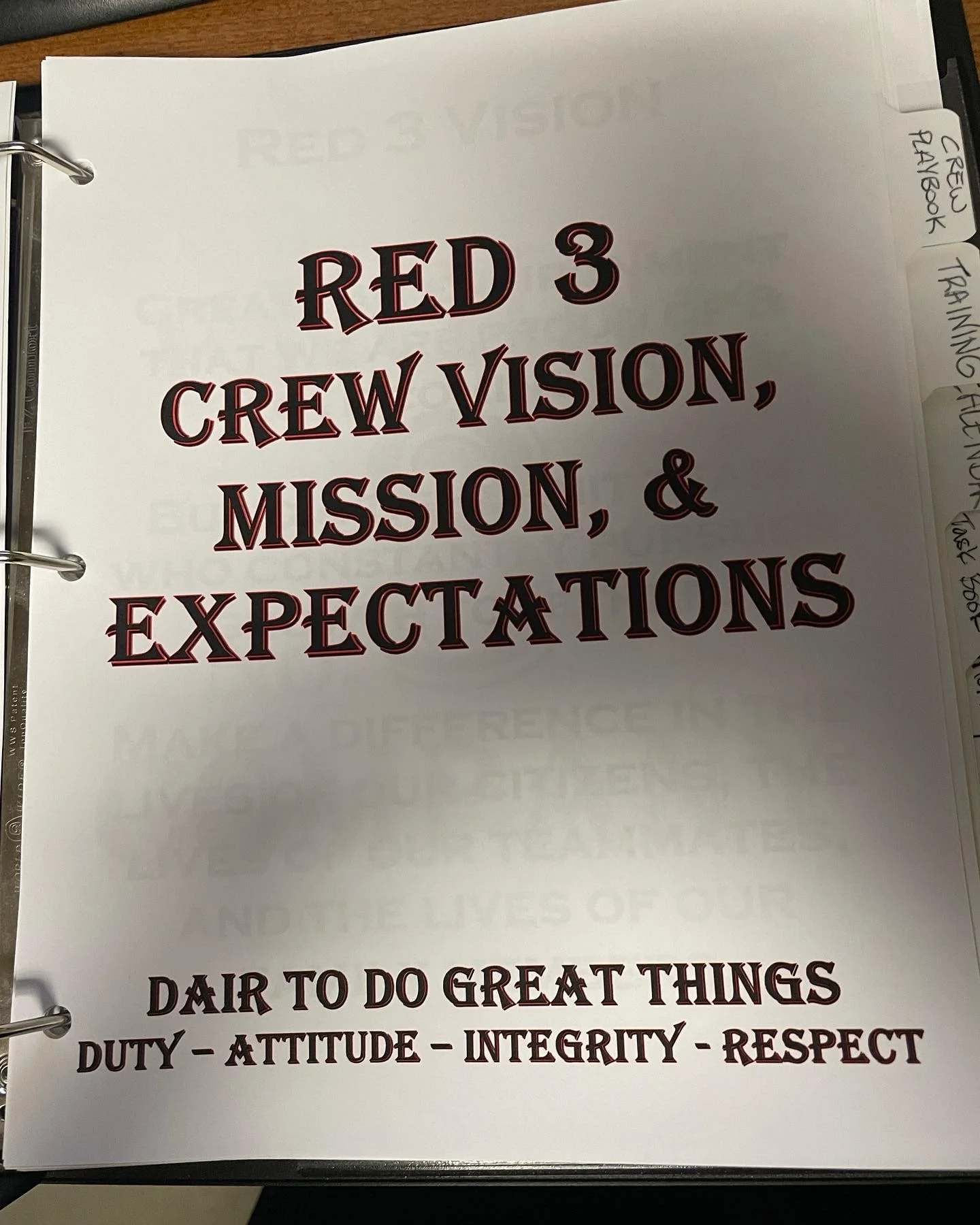
My Crew Vision, Mission, & Expectations
This is the updated document of my crew vision & mission.
-
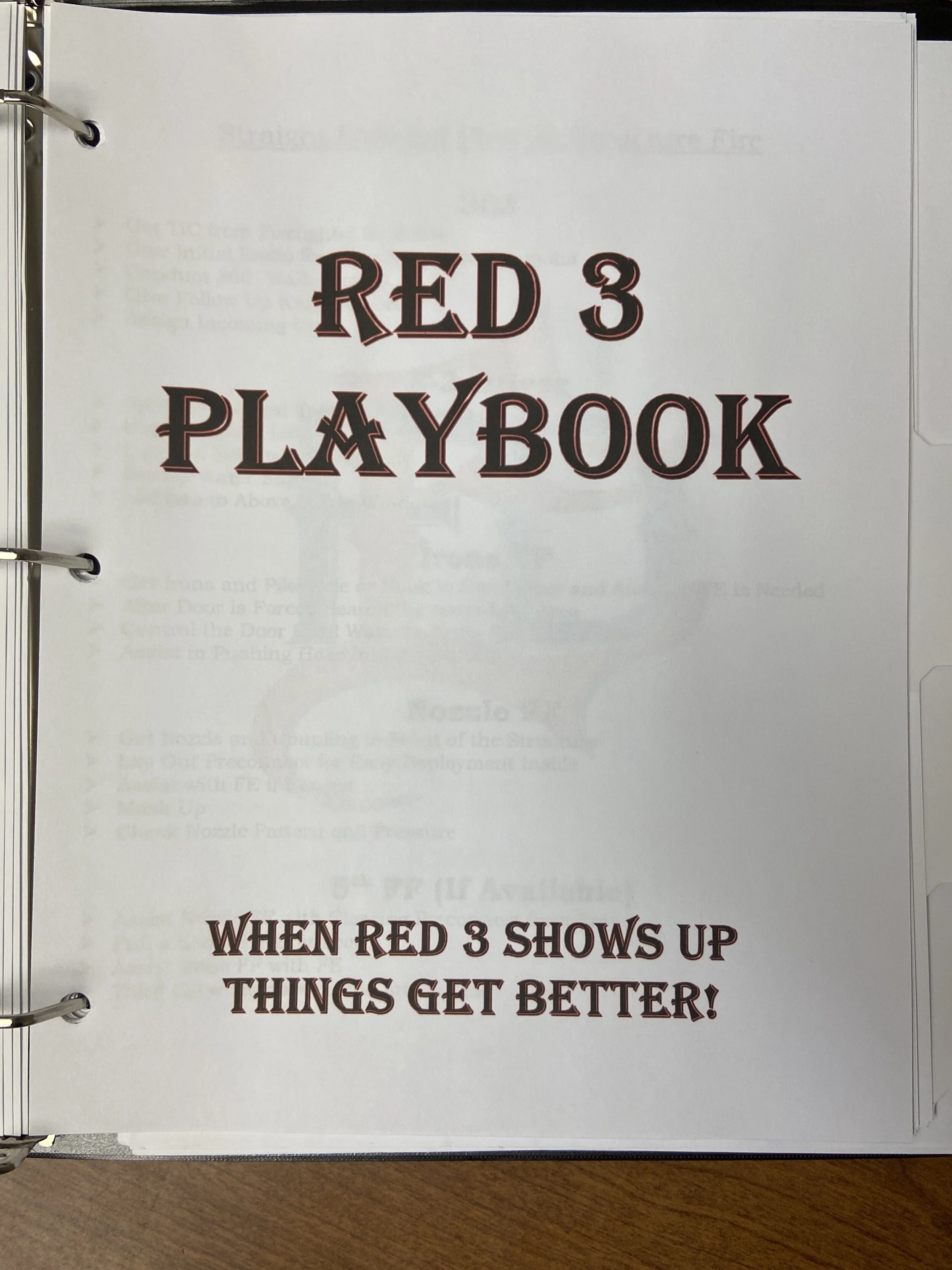
Red 3 Playbook
This is the playbook of riding assignments that we on my crew. This has been a tremendously helpful tool for us and especially myself as a station officer. This obviously won’t work for everyone but at the very least will serve as a starting point to help you create one of your own.
-
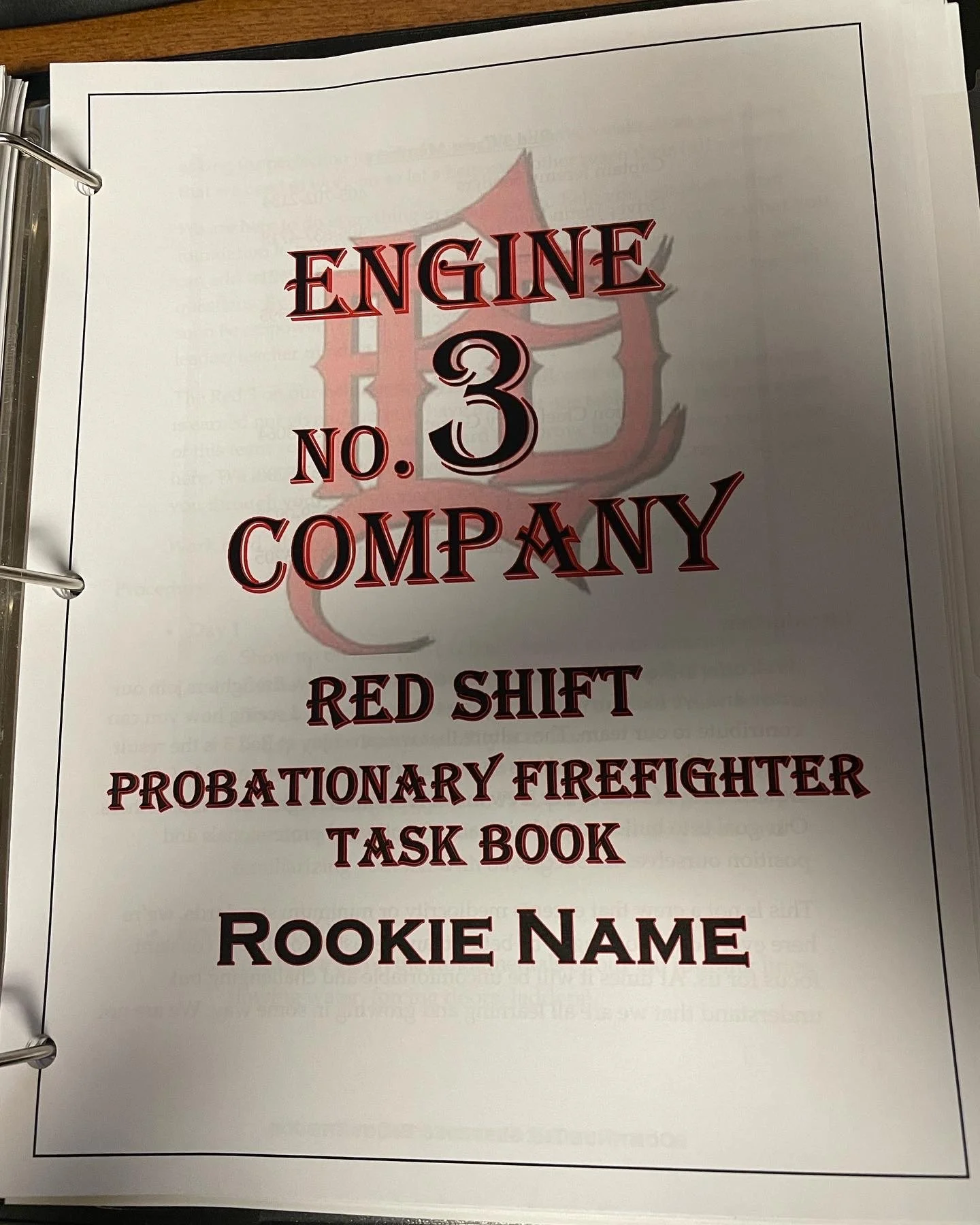
Our Recruit FF Task Book
Our new recruit firefighter task book.
-
Weekly Training Schedule
This is a schedule that we use to assist us with daily training. It isn’t something that we stick to strictly but that serves as a tool to help us stay on track if we don’t have anything in mind some days. Take this idea and either use it as is or use it as a templet to create your own.