Class Options
In the 2-hour class the learning objectives will be as follows:
Discuss why it is so important that we begin to take a more proactive approach to mental health as opposed to being reactive.
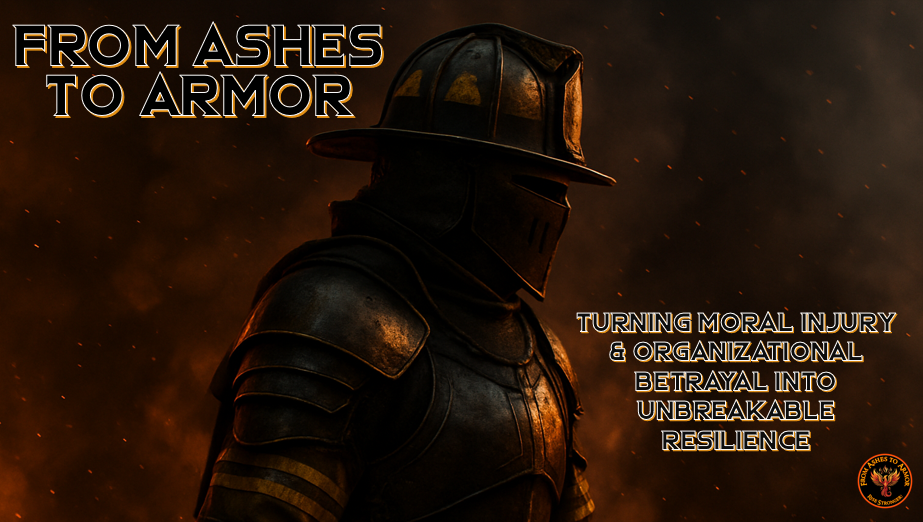
Define the two of the biggest issues that we as firefighters are facing today that no one is talking about: Morale Injury & Lack of Organizational Support.
Discuss how these hidden monsters are affecting us, what causes them, and what we can do about it.
Introduce some tools and techniques that we teach in the 24-hour immersive class “Developing Tactical Resilience” such as: Breath Work, Segmenting, Mental Rehearsal, and Mindfulness to name a few.
Discover “The 4 Pillars for Overcoming the Darkness”: Perspective, Connection, Action, and Perseverance.
Learn how each of these 4 pillars play a critical role in our ability to face and overcome adversity.
In the 4-hour workshop the learning objectives will be as follows:
Discuss why it is so important that we begin to take a more proactive approach to mental health as opposed to being reactive.
Define the two of the biggest issues that we as firefighters are facing today that no one is talking about: Morale Injury & Lack of Organizational Support.
Discuss how these hidden monsters are affecting us, what causes them, and what we can do about it. Share my own personal story of Morale Injury.
Introduce and dive into some tools and techniques that we teach in the 24-hour immersive class “Developing Tactical Resilience” such as: Breath Work, Segmenting, Mental Rehearsal, and Mindfulness to name a few.
Discover “The 4 Pillars for Overcoming the Darkness”: Perspective, Connection, Action, and Perseverance.
Learn how each of these 4 pillars play a critical role in our ability to face and overcome adversity.
Discuss how our unique personal story can play a role in helping others deal with adversity.
Discuss what areas that we have control over and those we don’t so that we can begin to focus our energy in the right direction.
In the 2-hour class the learning objectives will be as follows:
Discuss and reflect on the circumstances and individuals that have helped to guide you to where you are today.
Go through the formula that we can use to help us to get started: Start where you’re at, use what you have, & do what you can.
Dive into how to put the formula into action by: Finding our Identity, Using our gifts and abilities, & Pursuit of your purpose.
We will look at some common obstacles, challenges, and excuses that keep us from having an impact on others; as well as discuss how we can avoid them.
Reflect on each student’s story and how they can each use their story to make a difference in the world around them.
**Longer versions of this class are available as well**
It Starts With Me - We begin by taking a deeper look at ourselves to see where we can learn and grow to become better leaders. We’ll discuss areas that we can control. We will explore finding a balance of important character traits instead of just focusing on a few such as: Humble & Confident, Strong & Vulnerable, Competent & Coachable, and others. We' will discuss hurdles and obstacles that you’ll encounter along the way. And lastly, we’ll talk about the importance of finding your message and your mission.
Leadership Roles - This section we get a glimpse into the many “hats” or roles that leaders should be comfortable in. Roles such as: Navigator, Role Model, Teacher, Counselor, and others. We’ll also dive into “The Weight Of Leadership” and what we are really responsible for as leaders both formal and informal.
Firehouse Culture - In the third section we get into the meat of what many new to leadership are never taught, that is the importance of culture in the firehouse. We’ll start by gaining a better understanding of what culture is and why it should be important to us. We’ll look at comparisons of what an intentional culture looks like compared to a default culture. We then close out with the 8 D’s Of The Intentional Culture. The 8 D’s come directly from my personal experiences and as we go through everything from Designing your ideal culture to the Determination that it takes to keep pushing forward I will give examples and talk through situations that I have encountered with my crew while working to make a dramatic change of the culture.
In conclusion of this class you will see how the road map to successful cultural change in the firehouse is a bumping and winding one but the rewards are well beyond worth it. You’ll see how by starting the focus on ourselves and growing individually as leaders starts us out with a firm foundation to grow from. By learning the roles of a leader you will have a more rounded perspective of what is truly asked us of and what we are responsible for. And finally, through sharing the lessons that I have learned, the mistakes that I have made, and the experience of finally seeing a culture shift; I hope that you will leave inspired to make your own changes and ready to face your own challenges. This is how we can make a difference.
4 Objectives
1. Frustration - Will It Be the Beginning of the End or Just the Beginning? - Frustration can lead to actions that will undermine your message and your ability to impact others if we allow it to. However, frustration could also be exactly what we need to push us to explore other options leading to opportunity and inspiration. We will discuss how to harness frustration and use it to fuel our passion instead of allowing it to fuel our anger and resentment.
2. Embracing The Target - We will discuss what it is like to have a target placed on your back when you begin to stand up for what you feel is right and speak out against what isn't. How do we handle being the target, especially when you know you are doing the right thing? I will share my experiences in this area and encourage real conversation from the audience in order to help us all become stronger.
3. Getting Comfortable With Being Uncomfortable - The students will learn that growth and comfort can't coexist so they have to become more willing to step outside of their comfort zones. We will talk about keeping our eyes open for opportunities and not finding reasons to turn them down when they come. Our impact in the fire service and in life is only limited by our ability or inability to seek discomfort and growth.
4. Learning how to build or rebuild a special firehouse culture from the ground up. One thing that I have never heard a department teach is how to handle a broken or bruised culture in the firehouse as a station officer. I will use my experience doing just that to help those attending gain some critical experience from the lessons I have learned from my mistakes, failures, & wins.
**The length of this class can be flexible according to your needs and desired depth of content ranging from 4, 6, or 8-hour versions.**
Learning Objectives
1. Seeing Through Our Own Personal Bias – We will discuss how we each hold certain characteristics as more important because of what we are better at. For instance, if communication is one of my strengths and humility is one of my weaker qualities then when asked to list what I feel are the most important qualities of a leader chances are communication will somehow find its way high on my list, but interesting enough humility will not make the list. We will discuss why that is and how we can combat that bias and strive to balance out contrasting qualities to unlock your full potential.
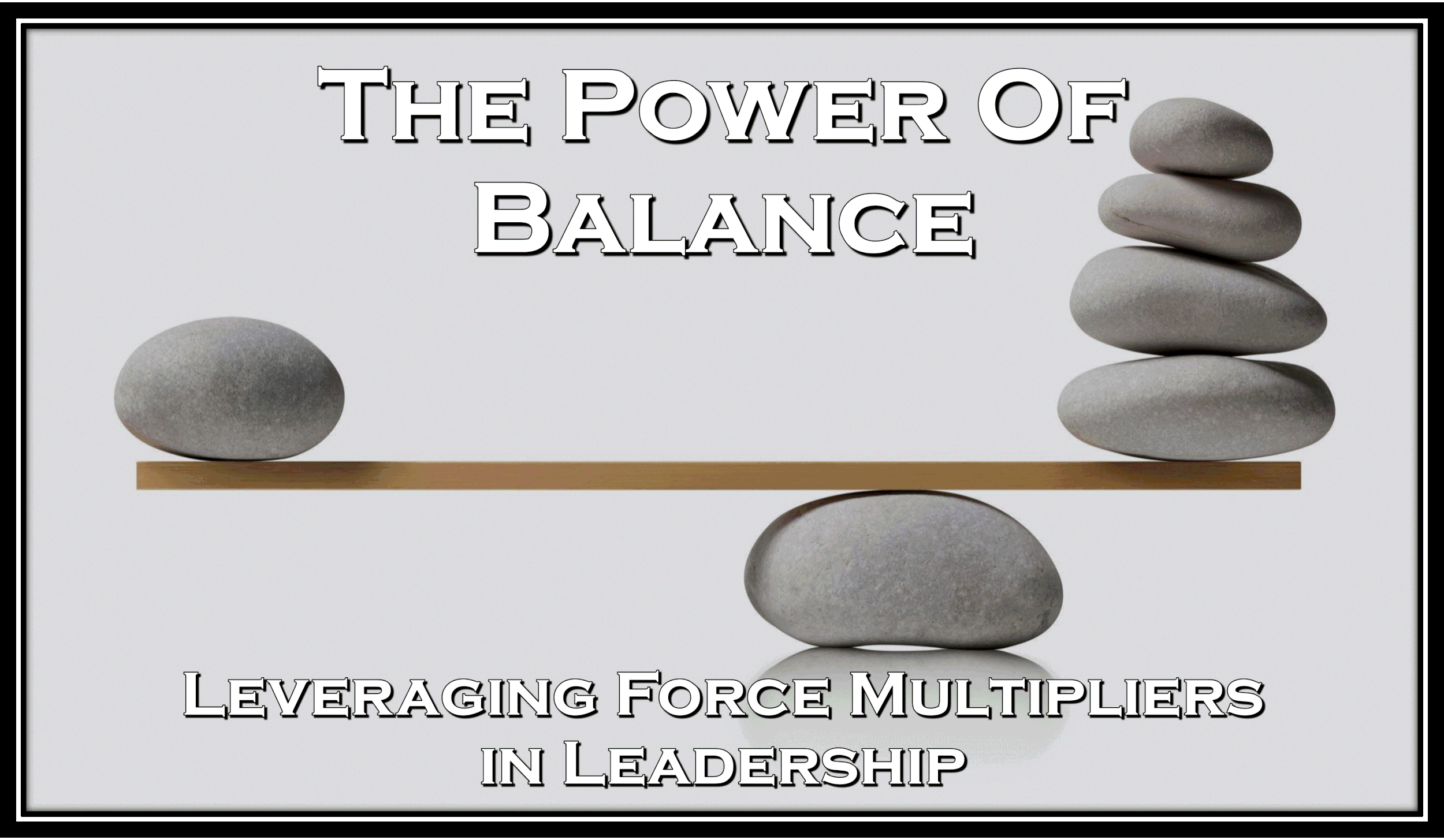
2. Understanding The Power of Balance in Leadership – We will discuss different contrasting qualities we need to find balance in such as: Strength & Vulnerability, Pride & Humility, Competent & Coachable, and Leads the Way & Empowers. The audience will learn that on their own each of these has their pros and cons but when we are able to find that balance between them it can be an immensely powerful thing. The balance is where good leaders become great ones and where normal people become influential and highly respected.
3. There Is No One Perfect Style – We will also discuss the importance of becoming a well-rounded leader when it comes to leadership styles. There is not one style that will be successful for every situation and every crew member, we must be comfortable adjusting styles on the fly according to whatever variables we are faced with at any given time. Certain situations require an Autocratic style while others can be managed in more of a Democratic or even Laissez-faire style at times. The same goes with different crew members, Joe might be motivated more by one style, but that style makes Sara want to disengage. We must understand that it is ok to adjust how we lead when it is necessary.
**The length of this class can be flexible according to your needs and desired depth of content ranging from 2, 4, or 6-hour versions.**